


Patient and Community Engagement Award
For quality and safety initiatives co-produced with patients, carers, or communities.
Voting is now closed. The winners will be announced on the main stage at the International Forum in Oslo on Wednesday 11 March at 15:30.
Patient and Community Engagement Award Winner
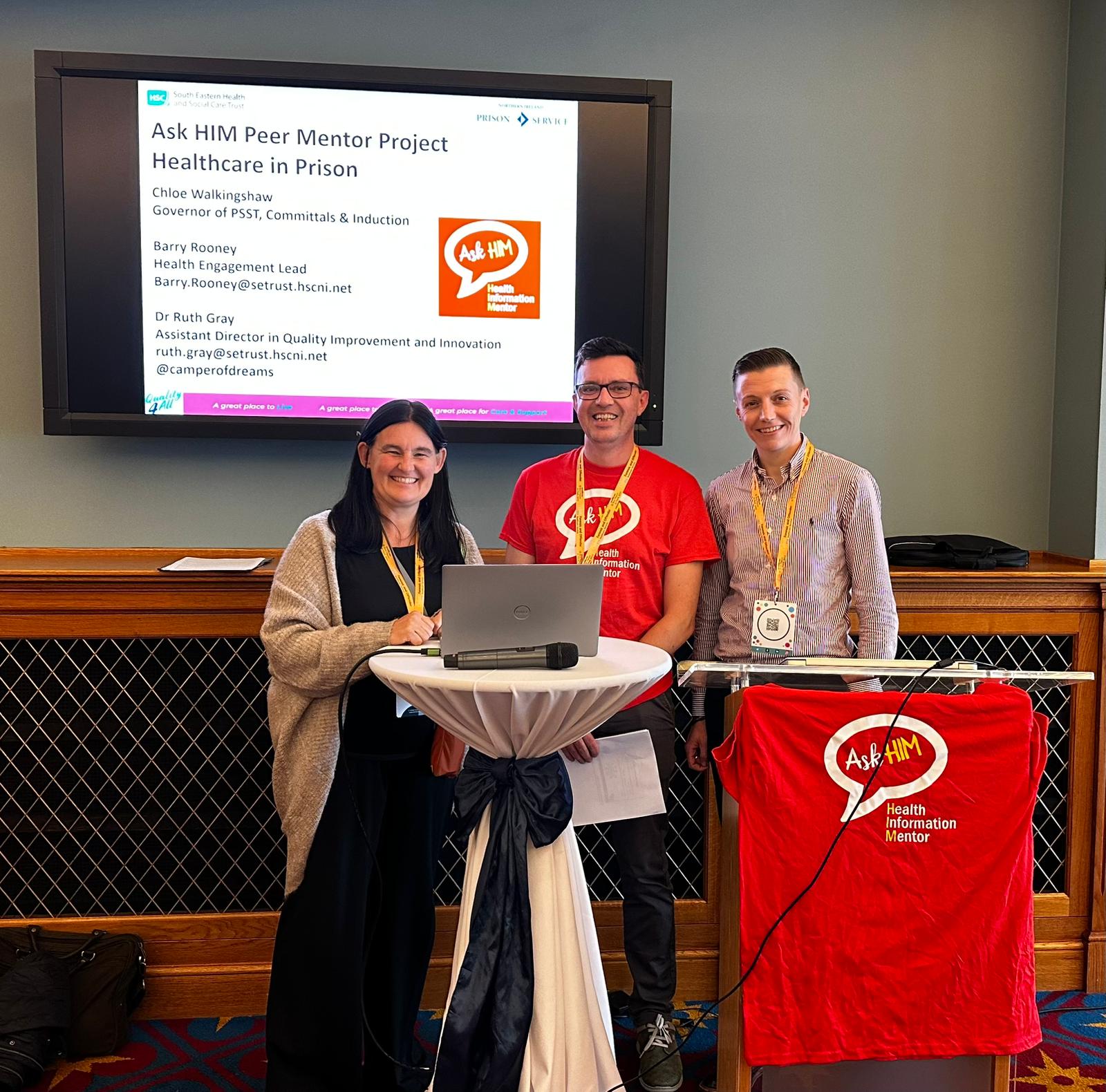
The Health Engagement Team at SEHSCT
Ask HIM: Co-Designing Health Engagement and Equity in Healthcare in Prison
Summary
The Health Engagement Team at SEHSCT working in partnership with the Northern Ireland Prison Service is redefining prison healthcare by placing people at the centre of improvement. Through bold co design with men in custody, prison staff, healthcare professionals, and in reach community and voluntary organisations, we have created a culture of welcome, trust, and agency. Our flagship initiative, Ask HIM (Health Information Mentor), demonstrates how lived experience can transform access to care and wellbeing in one of the most challenging environments.
Understanding the System
Prison is a complex community shaped by trauma, addiction, inequality, and disconnection. In 2018, we began by listening deeply. Moving beyond sporadic surveys, we conducted 107 in depth interviews with people entering custody, exploring experiences, expectations, and what truly mattered.
People’s priorities were simple yet profound: timely medication and clear information on accessing healthcare. Yet over 60% reported receiving no useful information at committal, delivered at the wrong time, in the wrong place. These insights became the foundation for change.
The Healthcare in Prison Health Engagement Team adopted a population health approach, challenging the traditional medical model and addressing intersectionality and inequality. By building listening interfaces with men in custody and collaborating with Belfast Met College and the NI Prison Service, we fostered trust and created space for meaningful co design.
Co Design in Action
Co design in prison requires courage and humility. We began with a workshop bringing together prison officers, governors, agencies, healthcare staff, and men in custody. The guiding question was simple: “What does a welcome look like?” The conversation was transformative, humanity connected across divides. Our first lesson: be brave, listen deeply, and share power.
Ask HIM – Health Information Mentor
The Ask HIM, a peer mentor network was developed collaboratively with men in custody, who named and branded the initiative, Ask HIM mentors greet new arrivals, explain healthcare services, and demystify access.
Today, mentors are active across HMP Maghaberry, wearing distinctive red Ask HIM T shirts, visible, approachable, and proud. They are positive role models, connecting people to care and fostering wellbeing.
Mentors have co designed induction sessions, health campaigns, and group programmes on BBV, anxiety, sleep hygiene, and living well in prison. They work with officers to run a Men’s Shed for isolated individuals and support foreign nationals through multilingual wellbeing sessions. This is improvement through agency: mentors test ideas in real time, iterate their network, and shape solutions that matter.
Mentors also designed the data methodology, recording and collating daily activity to identify themes in “what matters” conversations with new arrivals. These insights drive continuous iteration of the model. They co produced governance structures, including probation periods, supervision, psychological debriefing, training, and team building. Mentors now co design recruitment and selection, interviewing and training new mentors alongside the engagement lead and prison governor.
Impact and Evidence
- • Activity: Over 15,000 encounters recorded using mentor designed templates, capturing topics, referrals, and outcomes.
• Referrals: Mentor developed routes generated 10,680 monthly referrals in 2025, including increases in sexual health and Hepatitis B vaccination, evidence of effective peer led health promotion.
• Complaints: NIPS and healthcare complaints halved.
• Quality of life: Evaluation using adapted Fisher and Shapiro Core Emotional Concerns shows improved feelings of value, connection, and clarity about healthcare.
• Recidivism: Early indications suggest a 7% recidivism rate among mentors versus 49% for the wider prison population.
Learning and Sustainability
The Ask HIM network demonstrates how to embed a community assets approach in a high security setting. Success depends on trust, persistence, and leadership willing to cede power.
Key lessons:
- • Co design is not a project; it is a cultural shift requiring time and mutual understanding.
• Feedback loops and systemisation are essential for sustainability.
• Recognition of the role, including payment for mentors and dedicated resources are critical for scale up.
• Strong multi organisational governance and support structures must be established.
Despite being uncommissioned, this work has thrived through creativity and commitment, modelling a new way of working and is now spread to the other prisons in NI.
Recognition
- • SEHSCT Chairman’s and Quality Awards
• Presented at WHO and European Prison Health Federation Conferences
• Featured in the 5 Nations Health and Justice Collaborative
• Recognised in WHO HIPP COVID 19 Good Practice Report
• Published in International Journal of Prisoner Health (May 2021)
• Presented at RCGP Health and Justice Summit 2023
• Presented at ICIC 2024
• Presented at WMTY Beryl Institute Global Network 2025
Reflection
The Peer Mentor Hub challenges hierarchy and harnesses social capital. It echoes the Iceberg of Ignorance: those closest to the problem hold the solutions. In service design, there is no substitute for lived experience. Connection, belonging, and hope are foundational. Ask HIM mentors are a beacon across NI prisons, innovating, shaping care, and inspiring change.
The Patient and Community Engagement Award Shortlist
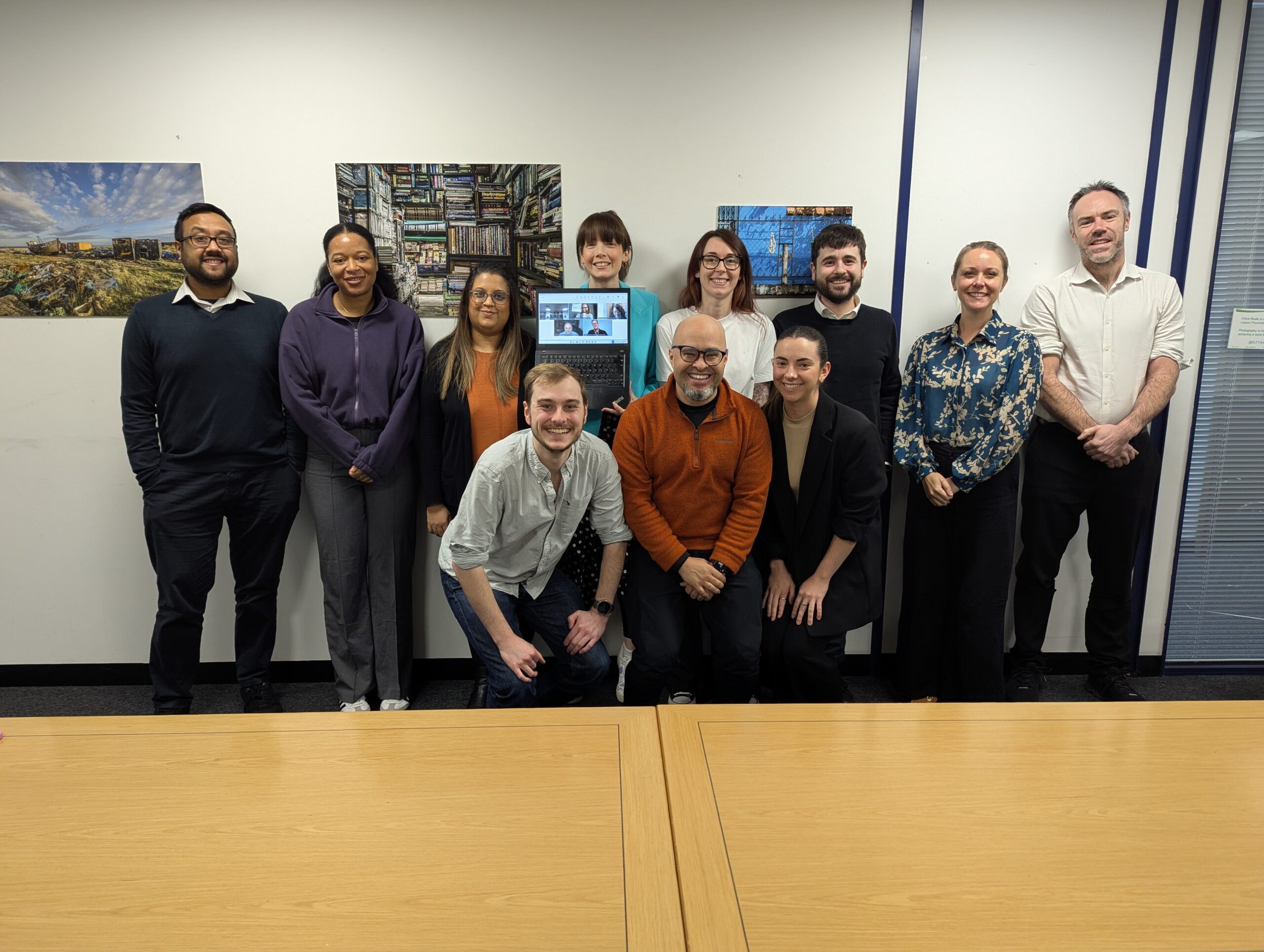
East London NHS Foundation Trust
East London NHS Foundation Trust is a provider of mental health, community health and primary care in one of the most deprived and diverse parts of the UK.
Over the last 12 years, the organisation has learnt about the value of involving patients and family members within quality improvement work, and has taken an increasingly systematic approach to this which has informed work across the globe on coproduction of improvement.
The organisation was the first to create standard definitions for involvement – coproduced with service users. The terminology of Big I (full coproduction) and little i (occasional involvement) was developed at ELFT by service users, and is now used to measure every QI projects (and increasingly applied by other organisations across the globe.
A retrospective analysis of 500 QI projects at East London NHS FT from 2014-2017 demonstrated that projects which had shown Big I involvement were 3.4 times more likely to achieve their aim than projects with no involvement of Little i involvement. This is the first known empirical evidence about the efficacy of patient involvement in QI. This was published in a peer review article:
Kostal G, Shah A. Putting improvement in everyone’s hands: opening up healthcare improvement by simplifying, supporting and refocusing on core purposes. British Journal
of Healthcare Management. 2021. https://doi.org/10.12968/bjhc.2020.0189
Over time, the organisation has applied QI in a rigorous way to the challenge of increasing the percentage of QI projects with Big I involvement. This has increased over time, to 60% of all projects currently actively being coproduced with people with lived experience. This is likely to be the highest level of coproduction for any health system globally.
Despite this increase, the organisation remains committed to continuous improvement. Over the last year, the QI department stratified data by service directorates and were able to clearly recognise the variation across the organisation and prioritise areas of focus. In areas with lower levels of involvement, a team of Improvement Advisors, service users and carers tested several interventions to increase the percentage of projects with lived experience representation on the project team. This included monthly meetings between local Improvement Advisors and People Participation Leads to review all projects, and inviting project leads to pitch their projects at local involvement groups. They also developed information packs for new projects which outlined the steps for recruiting service users and carers to their projects, and reviewed QI training content to ensure that coproduction was prominently featured.
In areas with higher levels of involvement, the team focused on understanding and improving the experience of service users and carers already involved in QI. To do this, they co-produced a survey which was shared monthly in local involvement groups and by e-mail. In addition to a subjective rating of experience of involvement, this survey provided a rich source of qualitative feedback which could be reviewed and actioned by People Participation Leads and Improvement Advisors at local level in their monthly meetings. Service users and carers have generated and tested additional change ideas, including a one-page profile to provide QI project leads with an overview of a service user or carer’s skills and access needs when they join a project.
This work achieved a 17% Trust-wide increase in the percentage of projects who lived experience experts on their project teams. Corporate services, who started with the lowest percentage of involvement, saw a 107% increase. One directorate in ELFT has now achieved 100% of all QI projects being fully coproduced – the first achievement of this nature in the last 12 years. Early results also show a gradual increase in average score of experience of involvement, and mechanisms are now in place to review and act on feedback.
Overall, ELFT has led the way in understanding and improving the involvement of service users and carers within quality improvement work – and contributed to the learning globally in this field.

Cognitive Value Care: Reducing Anticholinergic Burden to Protect Cognitive Health in Older Adults
Project Title: Cognitive Value Care: Reducing Anticholinergic Burden to Protect Cognitive Health in Older Adults
Older adults are disproportionately affected by the cumulative effects of anticholinergic medications, which significantly increase the risk of cognitive decline, confusion, falls, and hospital use. As an outpatient pharmacy serving a large elderly population, we saw first-hand how polypharmacy and inappropriate prescribing created preventable harm. Patients frequently reported memory issues or dizziness during counseling, yet no structured system existed to identify or reduce anticholinergic burden. Many felt unheard, confused, or resigned to living with these side effects.
Our team wanted to change that.
Tangible Impact: A Safer, More Connected Approach to Medication Use
In January 2025, we launched Cognitive Value Care—a pharmacist-led deprescribing initiative focused on identifying and reducing anticholinergic burden (ACB) among older adults. Over 10 months, we achieved a measurable and sustained improvement in prescribing quality and cognitive safety:
- • Mean ACB score reduced from 4.1 to 2.2 (≈46% reduction).
- • Emergency visits associated with anticholinergic effects fell from 4/month to 1/month.
- • 85% of patients reported improvements in alertness, memory, or clarity.
- • ACB screening reached 100% of eligible prescriptions.
- • More than 90% of high-risk cases received a deprescribing action.
- • ROI reached 3.6:1 through avoided hospital bed-days and reduced drug costs.
- • Patients expressed feeling “more awake,” “less forgetful,” and “more stable when walking.” Families reported relief after months of struggling with unexplained confusion or excessive sedation.
Collaboration: A System Built Across Roles and Boundaries
This project succeeded because it crossed traditional silos. The team included:
- • Outpatient pharmacists
- • The Medication Safety Center
- • Clinical physicians from geriatrics, cardiology, psychiatry, and urology
- • Nursing staff
- • Quality and safety specialists
- • Data analytics team
- • Patient and caregiver partners
Caregivers were invited into shared decision-making conversations and helped co-design patient education materials. Physicians collaborated in deprescribing decisions and provided clinical oversight. Data analysts built tracking tools. Leadership ensured governance, visibility, and accountability. This multidisciplinary structure embedded deprescribing into everyday workflow.
Inspiration and Leadership: Change From the Frontline
The project was initiated not by a directive, but by frontline pharmacists who noticed patterns of preventable cognitive harm. With no digital decision-support system and no existing protocol, the team led change through:
- • Manual ACB scoring
- • Structured deprescribing reviews
- • Patient-centred counseling
- • Weekly run-chart monitoring
- • Continuous PDSA cycles
This demonstrates leadership from the point of care — improving safety through innovation, not additional resources.
Sustainability and Learning: From Initiative to Routine Practice
From the beginning, sustainability was a core design principle. The project is now permanently integrated into our dispensing process:
- • ACB scoring is part of every geriatric verification.
- • Deprescribing prompts are standardized.
- • Monthly dashboards provide transparency and accountability.
- • PROMs continue to guide shared decision-making.
- • The learning culture strengthened: pharmacists became more confident deprescribers, prescribers became more aware of anticholinergic risks, and patients became empowered to question their medications. The process is now fully self-sustaining.
Equity and Inclusion: Giving Voice to Older Adults and Their Caregivers
Older adults — particularly those with cognitive complaints — are often excluded from conversations about their medication safety. This project intentionally centred their voices. Patient-reported outcome measures (PROMs) became a core metric. Counseling sessions encouraged open conversation. We saw a significant improvement in patient engagement, as well as a reduction in resistance to deprescribing as trust increased.
Caregivers — often overlooked — were integral partners, providing daily observations and receiving education on withdrawal expectations and safer alternatives.
Reflection: Lessons, Failures, and Future Growth
We openly acknowledge limitations:
- • Manual scoring limited scalability and required considerable pharmacist time.
- • Prescriber acceptance varied across specialties, requiring ongoing negotiation.
- • PROMs relied on self-reporting rather than formal cognitive testing.
- • A 10-month window could not fully capture long-term cognitive trajectories.
- • We learned that deprescribing is not only a clinical process, but a cultural one. Trust, communication, and patient partnership are as essential as pharmacology. If repeated, we would integrate digital ACB scoring, expand to primary care, and adopt standardized cognitive assessments for stronger long-term evaluation.
A Model with Potential for Wider Impact
This project provides a scalable template for deprescribing across MODHS and beyond. It demonstrates that meaningful change can emerge from frontline leadership, multidisciplinary collaboration, and patient engagement. Most importantly, it shows that older adults can experience real cognitive improvement when medication regimens are thoughtfully redesigned.”

Mwape Chisonde
Mwape Chisonde is a public health practitioner and community engagement advocate from Zambia whose work is grounded in a clear and transformative principle: patients are not beneficiaries of health programs—they are co-creators of solutions. Through his leadership at HEP Initiative, Mwape has intentionally shifted hepatitis responses from traditional top-down service delivery models to patient-led and community-co-designed approaches, ensuring that interventions are accessible, relevant, and sustainable.
Mwape’s commitment to meaningful patient involvement has been recognized internationally. He was awarded a scholarship to undertake Patient Expert Training with the European Patients’ Academy for Therapeutic Innovation (EUPATI), strengthening his expertise in patient engagement in research, policy, and health decision-making. In 2025, he also received a scholarship to participate in the Global Patients Congress, where the Global Patient Charter on Social Participation was launched—an initiative closely aligned with his work in advancing patient leadership in Zambia and across Africa.
Tangible Impact Through Co-Creation
Zambia carries a significant burden of hepatitis B, yet awareness, testing, and linkage to care remain limited. Rather than designing interventions in isolation, Mwape worked directly with people living with hepatitis, community leaders, youth groups, and frontline health workers to co-design outreach strategies informed by lived experience.
This approach resulted in innovative, culturally relevant engagement models. A notable example was football-based community mobilization, identified by young people and patients as a stigma-free entry point for dialogue. During World Hepatitis Day activities in Kalingalinga, Lusaka, 184 community members were tested, and 11 individuals who tested positive were successfully linked to care at the University Teaching Hospital. Patients were actively involved not only in mobilization, but also in shaping health messages, peer-support mechanisms, and follow-up pathways—demonstrating measurable impact through co-creation.
Collaboration Across Systems and Communities
Mwape’s work is characterized by effective collaboration across sectors and systems. He facilitated partnerships between patients, community-based organizations, local government authorities, healthcare facilities, diagnostic partners, and international stakeholders. These collaborations ensured that community priorities informed institutional responses, while health systems provided technical guidance and continuity of care.
He also organized the 2024 and 2025 National Hepatitis Commemoration Days in Zambia, deliberately positioning patient voices at the center of national dialogue. These commemorations brought together policymakers, the Ministry of Health, WHO, media, civil society, and people living with hepatitis, creating safe and visible platforms for patients to share lived experiences, challenge stigma, and influence public awareness and policy conversations.
This collaborative approach further extended to community-informed training workshops on the prevention of mother-to-child transmission of hepatitis B in rural districts such as Luangwa. Patients and community representatives contributed insights on barriers to antenatal care, directly influencing how health workers approached counseling, follow-up, and trust-building with expectant mothers.
Leadership Rooted in Shared Power
Mwape’s leadership style is defined by shared power rather than hierarchy. He established Hep Initiative Connect, a patient peer-support platform co-designed with people living with viral hepatitis. The platform now reaches 6,286 patients, including those in remote communities, providing psychosocial support, health education, navigation assistance, and stigma reduction.
Patients themselves identified the platform’s priorities and now serve as peer educators, advocates, and mentors. This shared-leadership model has strengthened patient confidence, increased health-seeking behavior, and transformed participants from passive recipients of care into active community advocates.
Sustainability, Learning, and Equity
Sustainability has been embedded through community ownership and capacity building. By equipping patients and community members with knowledge, advocacy skills, and leadership roles, initiatives continue beyond individual projects. Community champions now independently mobilize for testing, support peers in care, and advocate for preventive measures such as the Hepatitis B birth-dose vaccine.
Mwape has demonstrated strong reflective practice. Early interventions failed to adequately reach women, rural populations, and highly stigmatized groups. Through patient reflection sessions, barriers including fear, misinformation, and mistrust were identified, leading to adapted strategies such as simplified messaging, patient storytelling, and service delivery in trusted community spaces.
Equity remains central to his work. He has prioritized engagement with people living with hepatitis, residents of informal settlements, rural communities, and incarcerated populations. Patients are consistently represented in advocacy forums and policy discussions as equal contributors whose lived experience carries authority.
This commitment has translated into policy impact. HEP Initiative has engaged Zambia’s parliamentary health committee to ensure patient perspectives inform national strategies, and Mwape was invited by Africa CDC to contribute to the drafting of Hepatitis B implementation guidelines, incorporating patient-driven recommendations.
Reflection
Mwape Chisonde’s work demonstrates that meaningful and sustainable health improvement emerges when systems listen and communities lead. His approach to co-creation—grounded in humility, trust, and shared leadership—has resulted in solutions that restore dignity, strengthen systems, and amplify patient voices.
He is strongly recommended as a leader whose work exemplifies excellence in patient engagement, collaboration, equity, and sustainable health transformation.
Professional profile: https://www.facebook.com/mwape.chisonde.7

Kenneth Jun Logrono
Using Patients’ Lived Experience to Redesign and Reduce Needle Pricks for Bedside Lumbar Puncture through Co-Design
Background
Our team recognized that traumatic lumbar punctures (LPs) remain a significant patient safety and experience issue, occurring in approximately 10–30% of procedures. These events are often caused by multiple needle attempts, leading to blood-stained cerebrospinal fluid and, more importantly, emotional and psychological distress for patients.
When we reviewed our local data, we found that patients experienced an average of 2–5 needle pricks per LP. Through patient conversations, we learned that even a single needle attempt could leave lasting fear and anxiety. These insights made it clear to our team that LPs needed to be safer, more compassionate, and truly centered on the patient experience—not just technical success.
In response, we adopted a co-design approach, building trust-based partnerships between clinicians, patients, and care teams to redesign LP practices and reduce procedural trauma.
Objectives
Our team aimed to:
1. Reduce the number of needle attempts and pricks by 30% in bedside LPs in acute inpatient units over two years (from a baseline of 5.3 to 3.7).
2. Use patients’ lived experiences to re-engineer LP procedures through co-design, creating safer and less traumatic practices.
3. Strengthen trust-based partnerships between patients, clinicians, and multidisciplinary teams to improve both procedural outcomes and patient experience.
Methodology
The project began in 2023, with co-design fully introduced in 2024. Our multidisciplinary team—including physicians, nurses, quality specialists, and former patients—came together to critically re-examine LP practices.
We intentionally invited eight former high-BMI patients to share their lived experiences through structured interviews. These conversations provided powerful insights into both technical challenges and emotional impacts of LP procedures.
Using the IHI Collaborative Model, our team and patient partners jointly identified opportunities for improvement. Together, we co-designed changes addressing both clinical and patient-centered needs. Key interventions included establishing physician privileging for LP procedures, adapting patient positioning based on body size and comfort, and patients used bells to “ring readiness” to be pricked
Patients strongly expressed that the upright sitting position felt safer and less distressing, while clinicians found it improved anatomical landmark identification—demonstrating how patient insight and clinical expertise aligned to produce better outcomes.
Results
Patient interviews revealed recurring themes of fear, pain, lack of empathy, assumed consent rather than informed consent, and the trivialization of patient concerns. These insights became the foundation of our redesigned approach.
After 3 years, 88 LPs were performed with zero traumatic incidents, and an initial 57% reduction in needle attempts (from 5.3 to 2.3 pricks), and the introduction of co-design led to a further 68% reduction (1.7 pricks).
Additional outcomes included 100% compliance with physician privileging, more than 90% adherence to pre-procedure time-outs, and repeated LPs reduced from 17% to 0%.
These improvements reflected not only safer procedures but also a more respectful and patient-centered experience.
Conclusion
Our team learned that when patients are treated as true partners, they offer invaluable insights into emotional and physical aspects of care that clinicians may unintentionally overlook. This project demonstrated the power of co-design, where patients, nurses, physicians, and quality teams collaboratively create solutions that genuinely matter.
One simple yet impactful change—adjusting patient positioning based on body size—significantly improved procedural success and patient comfort. More importantly, this initiative strengthened communication, trust, and empathy between patients and clinicians.
By co-producing safety and quality improvements with patients, our team transformed LPs into a safer, more compassionate, and more respectful experience—demonstrating that patient partnership is not optional but essential to high-quality care.
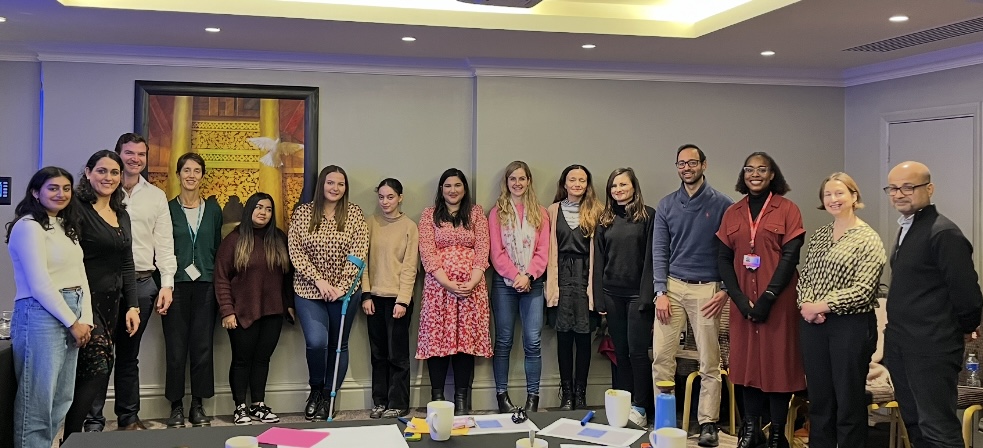
The Pathway to Equity project at University College London Hospitals (UCLH)
Across the United Kingdom, hospital appointment non-attendance—commonly referred to as “did not attend” (DNA)—casts a significant shadow over healthcare delivery. Each month, around 650,000 appointments are missed, leading to overburdened clinicians, delayed diagnoses, poorer outcomes for people with long-term conditions, and increased pressure on already stretched systems. Young people aged 16–24 are particularly vulnerable during this critical transitional life stage, yet their experiences and barriers have historically been underrepresented in healthcare research and service design.
The Pathway to Equity project at University College London Hospitals (UCLH), an award-winning initiative supported by the Q Lab of the Q-community, was established to address this gap. Using a systems-thinking approach, Phase One applied the iceberg model to explore how individual behaviours intersect with wider structural factors. Quantitative analysis of electronic health records was combined with qualitative insights from interviews, surveys, and community engagement events. Central to the project was a co-design committee of nine young people, eight healthcare professionals, and 28 school students, embedding authentic youth partnership throughout.
Analysis revealed a DNA rate of 16–17% among young people at UCLH, costing the trust over £1.1 million annually. Beyond the figures, 21 in-depth interviews and a survey of 130 students highlighted interconnected barriers, including deprivation, distance to hospital, and limited engagement with digital patient portals. These findings reinforced the need for practical solutions alongside deeper cultural and systemic change, while demonstrating the value of youth voice in shaping meaningful interventions.
As one team member noted, “We’re developing and testing solutions every week,” reflecting the project’s dynamic and iterative approach. A peer support coordinator captured the human impact simply: “Just the act of someone asking and listening seems to matter a lot… young people tell me they feel heard.”
Following a multi-stakeholder engagement event in July 2024, three priority interventions were co-designed:
i-The Peer Support Scheme operates as a downstream intervention tested in adolescent and young adult rheumatology. A dedicated coordinator proactively contacted young people identified via a DNA predictor model, offering personalised conversations, barrier identification, and flexible rescheduling supported by health-coaching principles. This evolved into a Peer Support Telephone Clinic providing non-clinical support, alongside “HangO.U.T.”, a digital space for peer connection, clinician dialogue, and reduced isolation.
ii-The Youth Health Space is an upstream, youth-led hub delivered in partnership with a local 6th form school & Public Health Haringey. The pilot provides access to onsite healthcare consultations to reduce school absence, health education, wellbeing support, and leadership opportunities through structured work experience for senior students.
iii-The Youth Healthcare Bridge: connects upstream and downstream activity. It is a youth-created resource hub built in a Time Banking platform Hexitime, where young people shape accessible, relevant healthcare materials. Through NHS work experience, participants inform, inspire, and connect others while identifying youth-friendly resources and strengthening knowledge exchange.
The project faced notable challenges. Sustaining youth engagement required alternatives to traditional co-design spaces, often perceived as adult-dominated or inaccessible. The team responded with consistent outreach, student-led workshops, and creative feedback methods. Cross-sector collaboration demanded alignment across organisations with differing priorities, supported by regular joint meetings and shared outcome frameworks. Digital exclusion was addressed by transforming school settings into healthcare access points and digital literacy hubs. Sustainability was strengthened by integrating interventions into existing systems and work experience pathways.
The impact has been substantial. In first year of the pilot, 69% of contacted young people attended or rescheduled appointments, compared with 36% of those not reached. Monthly DNA rates fell by 33%, reaching a low of 5.2% in April 2025—well below the national average of 8% and UCLH’s adolescent and young adult average of 11.2%. An estimated Annual savings of £76,000 support the case for scale-up, with four NHS trusts now exploring replication.
Beyond metrics, cultural change is evident. Staff report improved understanding of young people’s lived experiences and more relationship-focused care. Twenty-eight students from underserved communities completed meaningful work experience, building skills, confidence, and insight into healthcare systems.
Pathway to Equity demonstrates that equitable healthcare is best built with young people, not for them. Through co-production, peer support, and systems thinking, it reimagines healthcare as a relational, preventative ecosystem rooted in real lives—showing that health equity is not an aspiration, but a foundation.