


Angel Lee
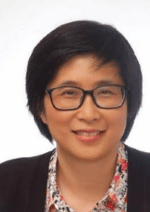
St. Andrew’s Mission Hospital; Singapore
Dr Angel Lee is trained as a geriatrician in Tan Tock Seng Hospital with a sub-specialty in Palliative Medicine. As a young registrar and the quality review officer in Geriatric Medicine, she was progressively exposed to quality control and clinical governance through membership in the hospital quality assurance committees, medical record review committee, pharmacy and therapeutic committee. In the partnership with community care organizations, she was involved in quality improvement work through the Kaizen Office. In 2009, she was seconded from Tan Tock Seng Hospital to Dover Park Hospice to be the Medical Director, where she helped to helped to set up the quality framework. She was involved in drafting the National Strategy for Palliative Care in 2011 and subsequently chaired a Ministry of Health workgroup responsible for the drafting of the National Palliative Care Guidelines. In 2014, she was seconded to St. Andrew’s Community Hospital to set up an in-patient Palliative Care Service. She became the medical director in 2018 and went about revising the quality framework and revamping the quality office to make it more responsive to the needs of a growing organization.
Seun Ming Lee
Thomson Medical Singapore; Singapore
Speaker bio to follow.
S18: Enhancing safety and patient experience
Friday 15 August 2025 | 13:25-14:50
Format: Presentation
Stream: Safety
Part 1: Using Multi-pronged Integrated Program in Reducing Assault Incidence in a Long-Stay Forensic Psychiatric Ward
Assault incidents often pose significant challenges to patients, staff and the organization. These assaults, which can be both patient-to-patient and patient-to-staff, results in significant physical injuries, emotional trauma, staff burnout, and decreased morale. In a forensic long-stay ward at the Institute of Mental Health (IMH), such incidents were frequent, necessitating a focused quality improvement initiative. The goal was to reduce the assault rate by 50% over a six-month period. The initiative focused on several interventions. A Patient Categorization Exercise (PCE) was introduced to group patients based on their psychiatric diagnosis, aggression risk, and rehabilitative potential. This facilitated better monitoring and individualized care plans. Token Economy system was implemented to incentivize patient participation in structured, rehabilitative activities, with rewards for maintaining assault-free behaviour. Staff also received comprehensive training designed to increase their confidence in managing challenging patient behaviours. Importance of empowerment and positive change agents was imperative for this initiative.
Kalaivanan Dakshnamoorthy Institute of Mental Health; Singapore
Part 2: Achieving and Sustaining Reduction in Hospital-Acquired Complications in an Australian Local Health Service
Reducing prevalence of hospital-acquired complications (HACs) is paramount for both patient safety and hospital financial performance because of its impact on patient’s recovery and health service delivery by diverting resources away from other core patient care activities. While numerous reports available in the literature for projects that successfully reduce specific HAC, questions remain about the sustainability of this isolated approach and there may be benefits for more wholistic programs that aim to align prevention strategies across hospital. This study describes such a program that utilises evidence and theories in the literature to achieve and sustain reduction in HACs in an Australian local health service between 2019 and 2023.
Catherine Li Fiona Stanley Fremantle Hospitals Group; Australia
Part 3: Care Transformation in the NUH Emergency Department: A Trifecta & Co-design Approach
Join us for an insightful peek into the mixed-method co-design approach behind award-winning improvement initiatives in the National University Hospital (NUH) Emergency (ED) & Children’s Emergency (CE) Departments, where multi-disciplinary teams tackle both process and service challenges to enhance patient experience and safety. This session will delve into NUH’s unique trifecta collaborative approach involving clinicians, nursing and operations. Learn how we engaged all stakeholders in effective change management and address the challenges faced by impacted job groups, ensuring both voices of patients and staff are heard during implementation. Additionally, discover strategies for leveraging different sources and types of patients’ feedback for iterating solutions to tailor-fit for a dynamic Emergency context. Attendees will gain valuable insights into creating a more responsive and agile patient-centric healthcare environment, making this presentation a must-attend for anyone committed to enhancing scores, reduce waiting time and facilitate multi-stakeholder collaboration.
Jay Tan National University Hospital; Singapore
Tan Li Xuan National University Hospital; Singapore
S17: Innovations in healthcare – developing responsible healthcare solutions
Friday 15 August 2025 | 13:25-14:50
Format: Presentation
Stream: Change
Part 1: Beyond Key Performance Indicators: How TB-Watch Revolutionises Tuberculosis Treatment Adherence
TB-Watch is an innovative app & web-based platform designed to reduce loss-to-follow-up (LTFU) rates in Tuberculosis (TB) treatment. Originating within Kuala Lumpur and Putrajaya’s public health system, TB-Watch has demonstrated a significant improvement in patient adherence rates, particularly beyond the limitations of conventional key performance indicators (KPIs) and monumental USD 88 thousand in cost save. This session will present TB-Watch’s impactful results from 2019 to 2022, showcasing how this digital solution has transformed the TB treatment landscape, leading to a broader application potential within public health. Participants will gain insights into leveraging technology for sustainable healthcare improvements.
Hasyirul Hashim WP Kuala Lumpur & Putrajaya State Health Department; Malaysia
Part 2: Revolutionising Patient Safety and Care Outcome with Integrated System: Transforming Nursing Care Productivity to Effortless Efficiency
This session unveils a groundbreaking approach to patient safety in general wards, showcasing the synergy between VitalScout (VS), Automated Code Red Alerts (ACRA), ICU Outreach Nursing (ICUORN) at Ng Teng Fong General Hospital, Singapore. We’ll explore how this innovative system has transformed patient monitoring, dramatically improving care escalation and reducing adverse events. Delegates will learn about the seamless integration of wearable technology, automated alerts, and specialized nursing support, resulting in a 100% compliance rate in care escalation and significant reductions in in-hospital cardiac arrests and unplanned ICU admissions. This presentation offers valuable insights for healthcare professionals seeking to enhance patient outcomes, optimize resource utilization, and revolutionize their approach to managing deteriorating patients. Join us to discover how this cutting-edge system can be adapted to your healthcare setting, potentially saving lives and improving overall quality of care.
Rosidah Idris Ng Teng Fong General Hospital; Singapore
Gao Lina Ng Teng Fong General Hospital; Singapore
Part 3: Stop the Leak! Mitigating nitrous oxide wastage from hospital manifold and pipelines
The healthcare sector is responsible for 4-5% of greenhouse gas emissions, significantly contributing towards the current global climate emergency. We believe that all healthcare providers should have an understanding of how healthcare activities contribute to climate change and be empowered to help reduce its carbon footprint. We will describe our multi-disciplinary team’s efforts to successfully decommission our hospital’s nitrous oxide manifold and transition to machine-mounted cylinders, thereby mitigating hundreds of tonnes of CO2 emissions yearly for the hospital and our planet. We believe our project is replicable by other hospitals and in keeping with the triple bottom line- enabling environmental and financial savings, while upholding good clinical practices.
Michelle Tan Changi General Hospital; Singapore
S16: Scaling patient-centered care for health equity
Friday 15 August 2025 | 10:50-12:20
Format: Presentation
Stream: Populations
Part 1: Building The Learning Community of ECHO-Pediatrics Through Telehealth in Vietnam
The Project Extension for Community Healthcare Outcomes (ECHO) model is considered a platform for academic medical centers to expand their healthcare workforce capacity to medically underserved populations. It has been known as an effective solution of continuing medical education (CME) for healthcare workers that used a hub-and-spoke model to leverage knowledge from specialists to primary healthcare providers in different regions. The ECHO model was born in 2003 by Prof. Sanjeev Arora at the University of New Mexico, USA, in response to the hepatitis C epidemic with 28,000 people infected in remote areas in New Mexico. Since then, the model has been replicated across 195 countries, 6 continents with 1000 hubs and 33 superhubs, and is committed to the United Nations (UN), World Health Organization (WHO), countries in Asia, Africa, Latin America in responding to epidemics and chronic diseases such as HIV, Ebola, Covid-19, Cancer, Tuberculosis, Hepatitis C, Epilepsy, Autism, Geriatrics.
In 2019, the National Children’s Hospital became an ECHO hub, in 2022 became a superhub, sharing the same mission and vision with ECHO in the community with the holistic health care strategy, creating equity in children’s health care in the regions, especially remote areas.
Nhung Le Vietnam National Children’s Hospital; Vietnam
Part 2: How Can We Facilitate Co-Creation of Care Plans for Patients Living With Type 2 Diabetes at System Level
Wagner’s Chronic Care Model has been adopted by many health systems as a framework to optimize care for patients living with chronic disease. Productive interactions between an informed, empowered patient (one who plays an active role in their care) and a prepared, proactive team of healthcare providers lie at the heart of the model. The model identifies multiple elements that can be modified to facilitate these interactions. However, resource constraints and pressures in the healthcare system often lead to interactions which fail to achieve the goal of having healthcare providers work with the patient to jointly identify problems, set goals, establish priorities, and develop an action plan and strategy for solving the problems that have been identified. To address this, the NUHS, in collaboration with the Year of Care Partnerships in the United Kingdom, has implemented and evaluated a system of person centered care and support planning which is now being scaled across our primary care system. Delegates may wish to attend this session if they are interested in building systems that facilitate patient involvement in co-designing their care journey, the outcomes of associated with implementing these systems, and the lessons from over the past decade from a system that may inform system level implementation based on a decade of experience.
Victor Loh National University of Singapore; Singapore
Tan Wee Hian National University of Singapore; Singapore
Part 3: COMBED: COMmunity BasED Intervention to Empower and Effect Positive Behavioural Change in Patients with Diabetes Mellitus
An exploratory pilot helmed by multi-disciplinary community partners to identify patients who are not followed up with a primary care provider for DM management, to be engaged for a personalised care planning, which includes behavioural change towards being cared for by a General Practitioner of their choice. Harnessing on currently available care partners, the personalised psychosocial support and health coaching offered to our identified patients have shared useful insights on:
- Sharing of experiences and challenges in identifying the appropriate patient group who will benefit from this pilot.
- Strategies adopted to overcome these challenges.
- Putting in place a programme that addresses the psychosocial and clinical needs of the DM patients.
- The tools for measuring and evaluation Proposed for future directions for community-based diabetes care.
- This session offers valuable insights for both clinical and administrative healthcare professionals.
Chee Wei Tan Changi General Hospital; Singapore
S15: Enhancing health outcomes: Empathy, trust, and behavioral change
Friday 15 August 2025 | 10:50-12:20
Format: Presentation
Stream: People
Part 1: Empowering Stroke Survivors: Co-Designing Safe, Personalised Physical Activity Interventions for Lasting Impact
This session explores the development and implementation of MOTIVATE, a groundbreaking, co-designed intervention to enhance physical activity among stroke survivors with physical disabilities. Leveraging behaviour change theory and input from those with lived experience, MOTIVATE addresses key barriers to activity, such as environmental limitations, lack of tailored guidance, and low confidence. Delegates will learn how physiotherapists trained in Healthy Conversation Skills (HCS) empower participants through personalised programs, adaptive equipment, and accessible resources. By attending, you will gain practical insights into co-design methodologies, strategies to incorporate behaviour change techniques, and the importance of patient (person)-centred approaches in improving health outcomes. Whether you are interested in designing interventions, engaging stakeholders, or advancing health equity, this session offers actionable knowledge and real-world results. Join us to explore how collaborative innovation is transforming post-stroke care and promoting safety, quality, and sustainability in healthcare delivery
Key session outcomes:
1. Explore Co-Design in Healthcare: Learn practical methods to collaborate with patients and caregivers to create impactful solutions.
2. Integrate Behaviour Change Techniques: Discover how motivational strategies like Healthy Conversation Skills (HCS) can enhance patient outcomes.
3. Design Personalised Care Programs: Gain insights into creating adaptive, inclusive, and patient (person)-centred interventions
Juliana Wang Singapore General Hospital; Singapore
Part 2: Measuring Person-Centred Care Practices: A Pilot Study at the Singapore General Hospital (SGH) Physiotherapy Department
Person-centred care is the new buzzword in healthcare, but how do we measure person-centred care practices of a healthcare institution or system? How person-centred are our healthcare practitioners? The SingHealth Centre for Person-Centred Care (CPCC) developed a measurement framework to answer these questions, and will share the findings and learnings of a pilot study on the framework done in collaboration with the Singapore General Hospital (SGH) Physiotherapy Department.
Key session outcomes:
1. Identify the five components of person-centred care, developed by the SingHealth Centre for Person-Centred Care (CPCC)
2. Appreciate the complexities and challenges in measuring person-centredness accurately and succinctly
3. Understand the measurement framework and components adopted in the pilot study in measuring person-centeredness.
Amanda Tan Singhealth; Singapore
Kenneth Goh Singapore General Hospital; Singapore
Part 3: The People’s Voice in Health Screening: Transforming Health Research and Empowering Communities Through Co-Design
Public efforts to promote health screening among Singapore’s eligible population have been largely planned in a “top-down” manner. Examples of initiatives include Screen For Life, and the HealthierSG campaign. While these initiatives have yielded positive results, there remains pockets of the population who remain unengaged and un-screened. We set up a Residents Advisory Committee (RAC) in Bukit Batok Grassroots and engaged them in a methodical manner to craft a health screening strategy advised by the residents, for the residents. In this talk, we will be describing our journey in engaging residents through the RAC, and what we have learnt.
Key session outcomes:
1. Be inspired to hear the residents voice when planning population health initiatives for better results.
2. Learn some of the tools that can be used to engage and co-design with residents.
3. Understand the process and challenges of co-designing with residents for their communities.
Mary Pei Ern Ng National University of Singapore; Singapore
Chong Ser Siong Community representative; Singapore
S14: Pathways to quality improvement and mental health advocacy
Friday 15 August 2025 | 10:50-12:20
Format: Presentation
Stream: Safety
Part 1: Designing for Patient Safety for Low- and Middle-Income Countries (LMICs)
Despite significant advancements in global healthcare, low- and middle-income countries (LMICs) continue to face major challenges in ensuring patient safety, especially in public hospitals. Joint Commission International (JCI) has developed the strategic “JCI Patient Safety Pathways Initiative” to address these gaps.
The initiative supports the development of patient safety and quality improvement programs through partnerships with ministries of health, healthcare organizations (HCOs), and national and international entities. It focuses on creating pathways for incremental improvement, involving high-level advocacy, policy dialogue, needs assessment, gap analysis, action planning, technical support, and capability building.
This session will outline the initiative’s design, highlight best practices from its implementation in demonstration sites, and align the work with the Global Patient Safety Action Plan 2021–2030. The goal is to equip healthcare leaders with strategies for building safer, more resilient, and sustainable health systems in LMICs.
Key session outcomes:
1. Identify major challenges and barriers low- and middle-income countries face in ensuring patient safety.
2. Outline key strategies for patient safety design essential to bring significant reduction in patient harm, and build safer, resilient and sustainable health systems.
3. Share best practices and learnings from the implementation of JCI Patient Safety Pathways Initiative aligned with the Global Patient Safety Action Plan 2021-2030.
Neelam Dhingra Joint Commission International; Switzerland
Part 2: Implementing a Safety Plan to Enhance Care for Service Users at Risk of Self-Harm in a Tertiary Mental Health Hospital
The session will cover the implementation of safety planning interventions, which have been shown to significantly reduce the risk of self-harm behaviour among service users in a tertiary mental health hospital. By focusing on safety planning that involves service users in their care, the presentation emphasizes the importance of person-centered approaches. Delegates will learn how to empower service users to recognize warning signs and develop personalized coping strategies, fostering a sense of ownership over their mental health. Delegates will also gain understanding into how these evidence-based practices can be integrated into existing care protocols, enhancing patient safety and outcomes. Lastly, the discussion around safety planning and self-harm can contribute to reducing stigma associated with mental health issues. Delegates will gain insights on how they can become advocates for change within their organizations, promoting a culture of co-creating quality care.
Key session outcomes:
Impact
1. Appreciate the imperative value of safety-planning in reducing self-harm incidences
2. Learn how to facilitate the co-creation of safety planning using person-centered approach
3. Gain understanding on the process of integrating and implementing harmonised safety plan at a system level
Cheryl Goh Institute of Mental Health; Singapore
Jancirani Annamalai Institute of Mental Health; Singapore
Part 3: Solving Hospital Access and Flow: Practical Strategies from Victoria’s TEC2 Program
Solving hospital access and flow challenges is complex work: there are no silver bullets. Drawing on the Institute for Healthcare Improvement’s global expertise in leading system-wide change over the past 30 years, this session will explore how Victoria’s Timely Emergency Care (TEC2) program is tackling these challenges head-on. With over 30 hospitals involved, TEC2 supports services to build the improvement capability, change leadership, and collaborative culture needed to unblock flow and improve access – grounded in both clinical and operational expertise. We’ll share what’s working, what we’ve learned, and the critical conditions for achieving system-wide impact. Attendees will leave with practical insights to inform their own hospital or regional flow strategies.
Key session outcomes:
1. Recognise common system-level barriers to hospital access and flow, and how hospitals are addressing them.
2. Apply practical lessons from TEC2 sites to strengthen hospital flow improvement initiatives.
3. Identify critical success factors for achieving and sustaining whole-of-hospital flow.
Ed Robertson Institute for Health Improvement (IHI); Australia
S1: Sustainable healthcare: An environmental impact to enhance patient care
Thursday 14 August 2025 | 10:40-12:10
Format: Session
Stream: Change
Part 1: Heal Our Patients, Heal Our Planet Make Earth Day, Every Day
Known as the Jurong Health Campus, the 700-bed acute hospital, Ng Teng Fong General Hospital (NTFGH) and 400-bed Jurong Community Hospital (JCH) are the first hospitals in Singapore to be designed and built together from the ground up as an integrated healthcare development. NTFGH and JCH were envisioned to transform the way healthcare is provided and our hospitals come with thoughtful features that are built around our patients’ needs. The smart, green, and sustainable hospitals were designed to ensure patient-centred services are delivered in a seamless and integrated way and significantly promote the aid patients in their healing and recovery. An oasis in a dense city, NTFGH & JCH has won eight hospital design awards, both locally & internationally as healthcare facilities that create a conducive healing environment for patients, visitors, and staff and sustainable hospital design. The super energy-efficient design utilizes 38 percent less energy than a typical Singaporean hospital and 69 percent less than the average U.S. hospital.
Key session outcomes:
1. Understand the link between healthcare and sustainability, including the environmental impact of healthcare systems and the health effects of climate change.
2. Apply sustainable practices in healthcare operations, from energy and water efficiency to waste reduction and eco-friendly design.
3. Foster a culture of sustainability by engaging stakeholders to promote awareness, accountability, and continuous improvement across the healthcare ecosystem.
Kian Ng Ng Teng Fong General Hospital, National University Health System; Singapore
Part 2: All Hands on Deck, Making Healthcare Sustainability a Reality in Singapore
This session explores the integration of sustainability into healthcare improvement practices, highlighting the role of the CHI Sustainability Academy (CHI SA) in building thought leadership and equipping healthcare professionals with tools and resources. By adapting the Sustainability in Quality Improvement (SusQI) Framework for Singapore in partnership with the UK Centre for Sustainable Healthcare, CHI SA empowers local teams to incorporate sustainability into their improvement initiatives.
Key session outcomes:
1. Apply the SusQI framework to improve healthcare sustainability and quality outcomes, adapting it to diverse clinical and organizational contexts.
2. Integrate sustainability into quality improvement by aligning environmental goals with care delivery enhancements and organizational quality standards.
3. Foster cross-sector collaboration through open learning platforms that provide tools, partnerships, and best practices for sustainable healthcare innovation.
Wong Hon Tym Centre for Healthcare Innovation, National Healthcare Group; Singapore
Part 3: Decarbonizing healthcare: Driving environmental sustainability as a pillar of healthcare excellence
In this session, we will explore innovative strategies that not only reduce environmental impact but also enhance patient care. Through case studies, participants will gain practical insights to drive environmental sustainability in their organizations. Join us to discover how going green can lead to safer, higher-quality healthcare while contributing to a healthier planet. This session is essential for healthcare leaders committed to future-proofing their institutions and improving patient health.
Attendees will learn about:
1. Sustainable practices that improve patient outcomes
2. Cost-effective green initiatives for healthcare facilities
3. Reducing medical waste without compromising care quality 4. Implementing energy-efficient technologies in operating theatres
Eugene Liu National University Health System; Singapore
Part 4: Balancing safety and sustainability: the impact of national PPE step-down strategies on healthcare workers and the environment
Singapore was among the first countries to implement PPE step-down measures for COVID-19. In September 2023, the Singapore Ministry of Health revised the national personal protective equipment (PPE) guideline for healthcare personnel (HCPs) attending to suspected or confirmed COVID-19 patients, recommending the use of N95 respirators alone. However, data on the impact of PPE de-escalation on staff COVID-19 incidence and sustainability outcomes are limited. Following de-escalation in PPE use in Singapore, what was the incidence of COVID-19 among staff and how did the amount of plastic waste change? This retrospective review analysed hospital PPE usage for quality improvement to evaluate staff COVID-19 incidence post PPE de-escalation, as well as the economic and environmental impacts. Sustainability measures included changes in carbon footprint, plastic waste generation, and cost savings of removing single-use gowns from routine COVID-19 care. Considering the importance of addressing climate change, there is an urgent need for better evidence, and to critically re-evaluate our approaches for recommended PPE for COVID-19 and other infectious diseases.
Key session outcomes:
1. Have better understanding on healthcare sustainability concept
2. Appreciation of the healthcare burden on the environment
3. Develop critical thinking to minimise healthcare impacts on the environment by making small changes in their practice.
Stephanie Sutjipto National Centre for Infectious Diseases; Singapore
Wong Hon Tym
Centre for Healthcare Innovation, National Healthcare Group; Singapore
Speaker bio to follow.
S11: Culturally relevant strategies to enhance aged care and community health education
Thursday 14 August 2025 | 15:35-16:05
Format: Presentation
Stream: People
Part 1: Effectiveness of Biography and Life Storybook for Nursing Home Residents: A Quasi-Experimental Study
There are currently limited studies that examined the use of biography and life storybook (BLSB) among the Asian older adult populations in the long-term care setting. This quasi-experimental study aimed to examine its impact on life satisfaction scores, depression, and quality of life among nursing home residents in Singapore. Two wards were assigned to either the intervention or control group. The intervention group was assigned to the BLSB intervention that comprised eight nurse-facilitated structured sessions over three months and their usual daily activities, while the control group was assigned to the routine activities. A total of 74 nursing home residents completed the study, with 37 in each group. The BLSB intervention improved depression, quality of life, and life satisfaction for nursing home residents in Singapore, with significant results observed across all three outcomes over the 3-month period. The study finding supported the use of BLSB as an effective reminiscence-based intervention for older adults in an Asian nursing home setting.
Guna D Sunlove Home; Singapore
Part 2: A Faculty Educational Program as a form of University and Government Partnership to Enhance the Quality of Healthcare
The Indonesian Hajj Pilgrimage is dominated by elderly individuals with health risk factors due to long waiting periods. Despite existing health programs, challenges persist, limiting their effectiveness. The Faculty of Medicine and Health Sciences at UIN Malang has partnered with the Batu City Government to address these gaps through an educational program aimed at improving healthcare quality. This session provides a roadmap for building successful university-government collaborations, offering insights into program selection, effective communication strategies, and essential soft skills. Attendees will learn from real experiences, including Project-Based Learning initiatives where students from various disciplines work together to enhance public health education.
Ermin Rachmawati Faculty of Medicine and Health Sciences UIN Maulana Malik Ibrahim Malang; Indonesia