


Rasa Ruseckaite
Monash University Australia
Speaker bio coming soon.
S11: Implementation and prevention: Elevating patient safety
27 August 2024 | 15:00-16:30
Format: Presentation
Stream: Safety
Part 1: Simple rules for ensuring safe care and avoiding medico-legal pitfalls
In this presentation, the audience will learn about seven basic rules that physicians and care providers can follow to provide safe care to their patients. These rules will also help them avoid medico-legal pitfalls. The seven rules are as follows:
- Practice good medicine
- Maintain good documentation
- Set clear expectations
- Foster good communication
- Ensure timely escalation
- Promote patient-centered decision-making
- Understand limitations
During the presentation, we will discuss examples of common mistakes that care providers make in these seven areas, and provide solutions to help them deliver safe and patient-centered care.
Shaik Mohiuddin SEHA, UAE
Part 2: Preventing goal-discordant care: improving documentation of advance care planning
Given the seriousness of a cancer diagnosis, it is important that patients engage in advance care planning (ACP) discussions with the healthcare team. Patients whose wishes are not documented in the electronic health record (EHR) are at risk of receiving goal-discordant care. Using a Lean Six Sigma framework, we evaluated the impact of a series of interventions using the Plan-Do-Study-Act (PDSA) Cycle. A multidisciplinary workgroup was convened, including representatives from the center’s Patient and Family Advisory Council. We created an analytical ACP dashboard. Next, we are developing a toolkit to streamline consistent ACP documentation and a deicated qualified healthcare professional to assist patients with goals of care discussions.
Yanka Campbell Johns Hopkins, USA
Part 3: The phoenix rises: improving patient safety and communication through revitalizing the SSC
Inspired by the rising Phoenix, this session shares our journey of rejuvenating the WHO Surgical Safety Checklist (SSC). The University of Calgary’s Equity, Quality, Improvement, and Safety (EQuIS) Research Team presents its collaboration with Harvard’s Ariadne Labs in developing the High-Performance Checklist (HPC) Toolkit. Using a quality improvement (QI) model, the Toolkit provides tools for customizing and optimizing the SSC. In our presentation, we describe the Toolkit’s development and deployment in surgical suites in Alberta, Canada, and Singapore. Employing mixed methods, we worked with surgical teams to rejuvenate their SSCs. This session demonstrates the power of innovation through iterative, multidisciplinary collaboration, offering insights for clinicians and QI professionals.
Mary Brindle University of Calgary, Canada
Johns Hopkins
US
Speaker bio coming soon.
Yanka Campbell
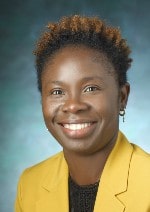
Quality Improvement & Patient Safety Professional, Oncology, Johns Hopkins, United States
Yanka Campbell, DNP, RN, AGPCNP-BC, CNE, is the Quality Improvement and Patient Safety Leader at the Sidney Kimmel Comprehensive Cancer Center at Johns Hopkins. In this role, she develops and manages complex improvement projects that address identified performance gaps, prevent patient harm, and improve outcomes. Her clinical experience is in acute oncology care, focusing on improving symptom management across the continuum of care. Dr. Campbell is the chair of the Comprehensive Cancer Center Consortium (C4QI) Bone Marrow Transplantation (BMT) and Immune Effector Cell Therapy (IEC) work Group. Dr. Campbell is also an adjunct faculty member at the University of Maryland School of Nursing (UMSON), where she teaches in the Master of Health Services Leadership and Management program. Before joining UMSON, she taught in the MSN (Entry into Nursing) Program at the Johns Hopkins University School of Nursing. In addition to her healthcare-related experiences, Dr. Campbell served in various leadership roles, directing administrative operations, including fiscal and budgetary management. Dr. Campbell received her Bachelor of Science in Accounting from Strayer University and a Master of Science in Nursing from the University of Maryland Baltimore. She ultimately received her Doctor of Nursing Practice (DNP) from the Johns Hopkins University School of Nursing. Dr. Campbell mentors DNP students through their scholarly projects and has presented several quality improvement projects at national conferences.
Shaik Mohiuddin
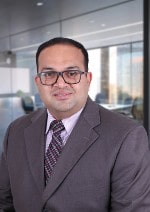
SEHA, UAE
Dr. Shaik Mohiuddin, FACHE is a distinguished healthcare leader with a remarkable career spanning over 18 years, characterized by an unwavering commitment to quality and patient safety. His journey in the field of healthcare is a testament to his profound dedication to ensuring the well-being of patients. His dedication to patient safety soon led him to transition into the realm of healthcare quality and patient safety from his clinical practice, setting the stage for a remarkable journey of professional growth and service. He worked in various positions, mainly leading healthcare systems in UAE in the capacity of Medical Director and Vice President for quality for large private healthcare providers.
In these influential roles, he oversaw quality and safety, driving them towards specific quality and patient safety objectives.He recently joined Abu Dhabi Health Services (SEHA) Dhafra region’s Chief of Quality.
Furthermore, Dr. Mohiuddin holds prestigious fellowships and certifications, including Associate Fellowship from the Australasian College of Health Service Management(AFHSM), Fellowship from the American Academy of Healthcare Executives (FACHE), and the esteemed Certified Health Executive (CHE) credential from the Canadian College of Health Leaders in addition to patient safety and CPHQ certifications. He has contributed to several peer reviews and published books and research in the area of patient safety.
Dr. Shaik Mohiuddin’s journey is a testament to the power of dedication, lifelong learning, and an unwavering commitment to ensuring excellence in healthcare and patient safety.
S15: Transforming healthcare through impact strategies and technology
28 August 2024 | 09:55-11:25
Format: Presentation
Stream: Populations
Part 1: Population health improvement: strategy and implementation
Dominique Allwood UCL Partners, England
Part 2: Workforce Transformation: Building a flexible, adaptive and engaged workforce
With the increasing demand for healthcare services against the backdrop of a fast-ageing healthcare workforce coupled with rising risk of attrition, workforce transformation is needed to ensure the sustainability of the workforce and the continued delivery of quality healthcare services to the population. In this presentation, we will share about how Tan Tock Seng Hospital has adopted a three- pronged strategy to build a Flexible, Adaptive and Engaged Workforce. This strategy aims to enhance workforce resilience, enable more flexible working arrangements for frontline staff, prepare the workforce through upskilling and education, and to create an environment that is supportive and safe for staff.
Kong Choong Tang Tan Tock Seng Hospital, Singapore
Part 3: Creating a safe and calm hospital: using data to improve patient flow
The Clinical Operations team from the RMH will describe their journey to improved access and flow for our patients through a bold and innovative strategy that included the implementation of a Victorian first – a Digital Coordination Centre and a corresponding Capacity and Patient Flow Escalation procedure. Challenges in healthcare access and flow are long standing and complex to solve but this team have created an approach to managing capacity and demand that is visionary and scalable to other health services and will provide inspiration that teaming informatics with operations can create solutions that enable our patients to receive timely care in a safe and calm hospital.
Catherine Humphrey and Jana Gazarek Royal Melbourne Hospital, Australia
Arul Earnest
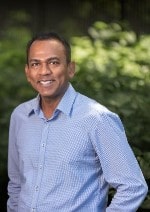
Biostatistics Unit, School of Public Health & Preventive Medicine, Monash University, Australia
Professor with the Biostatistics Unit in the School of Public Health & Preventive Medicine at Monash University, Australia Arul has authored a textbook (https://doi.org/10.1201/9781315373447), three book chapters, and over 245 publications in peer-reviewed international journals. Dr. Earnest’s research is globally recognized, with engagements like the International Society of Bayesian Analysis Conference and the World Congress of Epidemiology. He leads a data science team of 4 data analysts and 7 PhD students, with a research focus on Bayesian spatio-temporal models and machine learning techniques, showcasing his commitment to advancing healthcare methodologies in clinical registries.
Gustavo Marin
National University of La Plata, Argentina
Speaker bio coming soon.
Jenny Bernard
Hackensack Meridian Health, US
Speaker bio coming soon.
S14: Patient Voice in primary and community care – what works?
28 August 2024 | 09:55-11:25
Format: Presentation
Stream: People
Part 1: District Health Centres – are they effective?
Session details coming soon.
Fei-Chau Pang Commissioner for Primary Healthcare HKSAR, Hong Kong
Part 2: Managing multimorbidity in primary care: what works?
Session details coming soon.
Samuel Wong The Chinese University of Hong Kong, Hong Kong
Part 3: Patient’s voice – a journey together with the healthcare professionals
Patient Experience Survey
Eliza Wong The Chinese University of Hong Kong (CUHK), Hong Kong
Fion Lee Hospital Authority, Hong Kong