


Sultan Alharthi
Prince Mansour Military Hospital, Saudi Arabia
Speaker bio coming soon.
K3: Keynote 3: AI: driving healthcare transformation vs human transformation (with Joseph Sung and Erwin Loh)
Facilitator: Kamran Abassi, Editor-in-Chief of The BMJ, BMJ, England
Explore the relationship between ethical principles, regulation, and regulatory science, seeking to strike a delicate balance that enables, rather than inhibits the positive impact of AI on patients and human transformation.
Joseph Sung NanYang Technological University, Singapore
Erwin Loh Royal Australasian College of Medical Administrators, Calvary Health Care, Australia
K2: Keynote 2 – Delivering real world healthcare
Tuesday 27 August | 16:30-17:10
Disease is medical, health is social. The shift from healthcare to health requires mindset shifts from solution to ecosystems that addresses the needs and aspirations of our patients and population within their respective contexts, in particular where they live, work and play. This requires strong integration of health, social and living environments enabled by technology. Outcome measures also need to move beyond contributions of respective departments or institutions with value being defined across the life course. Delve into the transformative potential of moving beyond traditional boundaries and embracing a holistic approach to health and well-being.
Lee Chien Earn SingHealth, Singapore
K1: Keynote 1 – Smart hospitals, smart care (with Tony Ko, Joanna Pang and Calvin Mak)
Tuesday 27 August | 09:10-10:00
Exploring the power of innovative solutions in delivering smarter, more efficient care and the integration of new technologies that redefine the patient experience and driving value-based outcomes.
Tony Ko Hospital Authority, Hong Kong Special Administrative Region
Joanna Pang Hospital Authority Hong Kong
Calvin Mak Hospital Authority Hong Kong
Chung-mau Lo
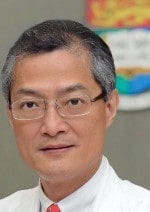
Secretary for Health, Health Bureau Hong Kong
Professor Chung-mau Lo was appointed Secretary for Health on 1 July 2022. Before joining the Government, he was Hospital Chief Executive at The University of Hong Kong-Shenzhen Hospital, Chair of Hepatobiliary & Pancreatic Surgery at The University of Hong Kong and Director of Liver Transplantation Centre at Queen Mary Hospital.
Professor Lo has devoted himself to clinical work, teaching and scientific research in the field of hepatobiliary surgery for more than three decades. He is internationally renowned for his expertise in hepatobiliary surgery and liver transplantation. He has published over 600 original articles in refereed international journals and his H-index is 94. His pioneering work in adult right lobe living donor liver transplantation has revolutionised the practice of liver transplant world-wide and has put Hong Kong on the world map of liver transplant. He and his team were awarded China’s top national honour of First-class State Scientific and Technological Progress Award in 2005.
He was the President of the International Liver Transplantation Society and the International Society for Digestive Surgery. He has served in the editorial board of many prestigious journals, including the American Journal of Transplantation, Liver Transplantation, Surgery and the Annals of Surgery. He has been elected as an Honorary Fellow of the American Surgical Association, the American College of Surgeons, and Royal College of Surgeons in Ireland as well as an Honorary Member of the European Surgical Association.
Professor Lo served as the Hospital Chief Executive of The University of Hong Kong-Shenzhen Hospital from November 2016 to June 2022. Under the “One Country, Two Systems” strategy, he has actively leveraged the advantages of Shenzhen-Hong Kong cross-border collaboration to advocate “Green Healthcare Reform ” in public hospitals, and to promote medical integration in the Greater Bay Area. Under his leadership, the Hospital became the youngest High-level Hospital of Guangdong Province in 2018 and received Shenzhen Municipal City Mayor’s Quality Gold Award in 2020. The Hospital has been selected as a National High-Quality Development Hospital in 2021.
S12: Quick fire presentations
27 August 2024 | 15:00-16:30
Format: Presentation
Stream: Change
Part 1: Implementing genomic medicine: an evaluation of the Hong Kong Genome Project (HKGP)
Researchers from the University of Hong Kong share experience and findings from evaluating the initial phase of the Hong Kong Genome Project (HKGP). The HKGP aims to develop genomic medicine for better health and well-being by providing access to whole genome sequencing, initially for rare disease and hereditary cancer before expanding to the wider population. The session explores how to accelerate the integration of genomic medicine into the healthcare system by driving clinical application, advance scientific research, nurture talents, and enhance genomic literacy in the general population.
Samuel Yuk Ching Sze University of Hong Kong, Hong Kong
Part 2: Implementation of a new intestinal microbiota transplantation service in Hong Kong
Clostridioides difficile infection (CDI) is one of the most common nosocomial infections worldwide and associated with significant morbidity and mortality. Antibiotic therapy is effective but a significant proportion of patients develop recurrent or refractory disease where further antibiotic treatment is associated with suboptimal outcomes. Intestinal microbiota transplantation (IMT) has emerged as an effective modality for the treatment of recurrent or refractory CDI. Herein, we share our experience of exploring this therapy in the early stages, how we collaborated with academia to build Hong Kong’s first stool bank from scratch, the actual implementation of the IMT service in the public sector, and future developments in this exciting space.
Rashid Lui Hospital Authority, Hong Kong
Part 3: Innovation in the surgical counting process to prevent retained surgical item
A innovative design with evidence-based design surgical counting information system is essential for patient safety and efficient surgical procedures. It automates the tracking and documentation of surgical instruments, sponges, and other materials used during operations, reducing the risk of retained foreign objects. By providing real-time information, it enables accurate and timely counting, minimizing errors and improving patient outcomes. The system facilitates seamless communication and collaboration among surgical team members, enhancing coordination and efficiency. Additionally, it offers comprehensive documentation for regulatory compliance and quality assurance purposes. Overall, a surgical counting information system ensures accurate inventory management, promotes patient safety, and streamlines surgical processes.
Ngan Hoi Tik Hospital Authority, Hong Kong
Part 4: Caveat emptor! Dynamic consent & normal birth in the digital era
We are witnessing an epidemic of misinformation around evidence related to birth and pelvic floor trauma across multiple jurisdictions. The poor outcomes that ensue from such misinformation are manifesting through multiple inquiries into maternity services, as is seen in the United Kingdom and Australia. This must change. The aim is to see research around consent in birth and the use of technology to translate into better information provision for patients in pregnancy and birth.
Harsha Ananthram Illawarra Shoalhaven Local Health District, Australia
Ngan Hoi Tik
Hospital Authority Hong Kong
Speaker bio coming soon.
Rashid Lui
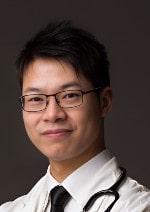
Associate Consultant, Hospital Authority, Hong Kong
Dr Rashid Lui is currently the Head (Clinical Service), Associate Consultant and Clinical Assistant Professor (Honorary) of the Division of Gastroenterology and Hepatology, Department of Medicine and Therapeutics, Prince of Wales Hospital, Hospital Authority (HA). He is a quadruple board accredited physician (Gastroenterology [GI] & Hepatology, Medical Oncology, Genetics and Genomics [Medicine], Advanced Internal Medicine) with clinical interests in digestive cancers, advanced endoscopy and gut microbiota modulation. In close collaboration with the Faculty of Medicine, Chinese University of Hong Kong (CUHK) and the Department of Quality and Standards, HA Head Office, he has spearheaded the introduction of Faecal Microbiota Transplantation (FMT) in Hong Kong and is currently the Coordinator of the HA FMT Service.
He graduated from the Faculty of Medicine, CUHK in 2010 with Distinctions in Paediatrics, Obstetrics & Gynaecology and Microbiology. He was the recipient of the Young Investigator’s Award (2nd Prize) at Asian Pacific Digestive Week 2018, the inaugural Dr Stanley Ho Medical Development Foundation Scholar at the Wellcome Centre for Human Genetics, University of Oxford, Distinguished Young Fellow of the Hong Kong Academy of Medicine 2019, and the 8th Youth DreamMakers Award 2023 in recognition of his efforts in developing new care models in GI oncology and introducing novel treatment modalities such as FMT to Hong Kong.
Dr Lui has published in peer-reviewed journals including the New England Journal of Medicine, JAMA Oncology, Gastroenterology and Gut, with a h-index of 19 (from Google Scholar). He currently serves as the Founding Co-Chair of the Emerging Leaders Committee, Asian Pacific Association of Gastroenterology (APAGE), Member of the Young Members Committee, World Gastroenterology Organization (WGO), Member of the Taskforce on Quality of Colonoscopy, World Endoscopy Organization (WEO), Social Media Editor for the Journal of Gastroenterology and Hepatology, Member of the Asia Pacific Working Group on Colorectal Cancer Screening, Vice President of the Hong Kong Association for the Study of Liver Diseases (HKASLD), and Chair of the Public Affairs Committee of the Hong Kong Society of Gastroenterology (HKSGE).
Samuel Yuk Ching Sze
University of Hong Kong Hong Kong
Speaker bio coming soon.
S10: An ageing population: smarter, safer care
27 August 2024 | 15:00-16:30
Format: Presentation
Stream: Populations
Part 1: Smart, safe, active ageing in Hong Kong – the way forward
Donald Li Elderly Commission, Hong Kong SAR, Hong Kong
Part 2: Care of elderly & medical-social collaboration
Tak-Yeung Chan Hospital Authority, Hong Kong
Part 3: Appropriate legal matters for end-of-life care
Raymond Lo British Medical Association, Hong Kong
Part 4: Polypharmacy and potentially-inappropriate medications in the elderly cancer patients receiving cancer treatment
Most of the elderly cancer patients have pre-existing illnesses. Excessive medications would lead not only futility, but also result in adverse outcomes. This study was a prospective cohort study conducted among the elderly non-hematologic cancer patients (= 65 years old) whom a medical oncologist had decided suitable for systemic therapy. We found that among elderly cancer patients suitable for systemic cancer therapy, around two-thirds of patients had polypharmacy (PP) and potentially inappropriate medications (PIMs). Higher co-morbidity index was the sole significant predictor of PP; while only primary lung cancer was associated with PIMs. PP was associated with unplanned hospitalization.
Chanyoot Bandidwattanawong Navamindradhiraj University, Thailand