


Marianne Ng
University Health Network, Canada
Speaker bio coming soon.
S4: Harnessing technology for enhanced diagnosis and patient care
27 August 2024 | 10:30-12:00
Format: Presentation
Stream: Change
Part 1: Digital transformation is everywhere, but are we making life safer for patients?
Anticoagulants are used extensively for thrombotic and embolic disorders. Whilst incredibly effective when used appropriately, they are deemed high risk medications. It’s these risks, such as major bleeding, that our research aims to prevent. In the current clinical environment, healthcare organisations are investing in health information technology as a quality improvement measure to enhance patient safety. This session presents the effect of electronic medical record (EMR) implementation on the safety and quality of therapeutic anticoagulation management, highlighting strategies to harness digital technology to promote safety for hospitalised inpatients.
Jodie Austin The University of Queensland, Australia
Part 2: Will the artificial intelligence take place in stroke prevention?
Recognizing stroke risk factors and creating behavioral changes will be possible with the more common use of today’s possibilities. Artificial intelligence and machine –learning have begun to attract great attention in the field of medicine, as in every field today. In the field of neurology, the contribution of artificial intelligence to improve diagnosis, creating risk algorithms and developing scales to measure risk level, and contributing to treatment decisions is being investigated by more and more studies. This new achievement can be used to decrease stroke prevalence and incidence by using big data and by distributing prevention tools through common smart devices.
Serefnur Ozturk Selcuk University Faculty of Medicine, Turkey
Part 3: Multidisciplinary approach to enhance control of blood pressure in essential hypertension patients
Hypertension leads multiple complications including cardiovascular pathology, stroke, and renal failure. This controllable condition is next to smoking as a cause of mortality from avoidable cardiovascular events. Despite global efforts to manage hypertension in recent years, its frequency among adults has been increasing. Hypertension is a highly prevalent disease in Saudi Arabia with poor control rates. The “Vibrant Society”, one of the main pillars of the Kingdom’s vision 2030. The program will work to achieve improved health and healthcare services and also work to complete the implementation of the strategic objectives which are: facilitating access to health services, improving the quality and efficiency of services, promoting prevention of health risks.
Sultan Alharthi Prince Mansour Military Hospital, Saudi Arabia
Maqsood Muhammad Bilal
Eastern Health Cluster, Saudi Arabia
Speaker bio coming soon.
Mobarak AlMulhim
Eastern Health Cluster, Saudi Arabia
Speaker bio coming soon.
Serefnur Ozturk
Selcuk University Faculty of Medicine, Turkey
Speaker bio coming soon.
Jodie Austin
The University of Queensland, Australia
Speaker bio coming soon.
S2: Enhancing population health and the development of alternative medicine
27 August 2024 | 10:30-12:00
Format: Presentation
Stream: Populations
Part 1: Safe options and integration of alternative medicine
Session details coming soon.
Yi Bin Feng Hong Kong University, Hong Kong
Part 2: Development of a clinical guideline for Herb-drug co-use for Hospital Authority and beyond
The Integrated Chinese and Western Medicine (ICWM) programmes, initially known as ICWM Pilot Projects was commenced in HA hospitals since 2014. The safety of herb-drug co-use is crucial in the practice. In addition to a heightened assurance of herb safety, commercial herb-drug interaction databases from overseas were being subscripted to provide guidance for clinical practice. Despite the availability of several well known databases, gaps remained between their recommendations and real life practice. To address the problem, the Expert Panel on Herb Safety was formed to develop a clinical guideline for the integrative use of Chinese herbs and drugs. The panel consisted of experts from both Chinese medicine and western medicine fields. Systemic review were performed on the subject followed by risk assessment on individual herb for potential herb-drug interaction. Clinical recommendations were made according to the risk level of a herb assigned through consensus meetings. The resultant guideline consisted of the many recommendations made by the panel which is evidence-based, with a wide safety margin and being user-friendly. Further enhancement, updating and validation of the guideline is in progress with a vision to extend its use for ICWM practice outside HA.
Tse Man Li Hong Kong Poison Centre, Hong Kong
Part 3: How to complement Western Medicine with Traditional Chinese Medicine
Justine Wu Chinese University of Hong Kong Medical Centre
Tse Man Li
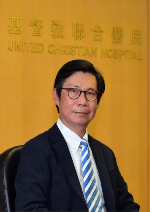
Medical Director, Hong Kong Poison Centre, Hong Kong
Dr Tse is a clinical toxicologist and an emergency physician in Hong Kong. He has a keen interest in the safety of Chinese medicine (CM) and has been involved in the development of quality and safety policies for the management of herbs in HA tripartite CM clinics. Since 2014, he serves as the co-chairman of the Expert Panel on Herb Safety for the Integrated Chinese and Western Medicine (ICWM) programme. In 2023, the ICWM Treatment Safety Centre was established under the Hong Kong Poison Control Centre to focus the effort in HA and to collaborate with external stakeholders to advance the science and art of ICWM safety. Dr Tse is an Adjunct Associate Professor of the Hong Kong Institute of Integrative Medicine, CUHK and a member of the Chinese Medicine Development Committee of HKSAR.
Vincent Chung
The Chinese University of Hong Kong, Hong Kong
Speaker bio coming soon.
Yi Bin Feng
Hong Kong University, Hong Kong
Speaker bio coming soon.